
No products in the cart.
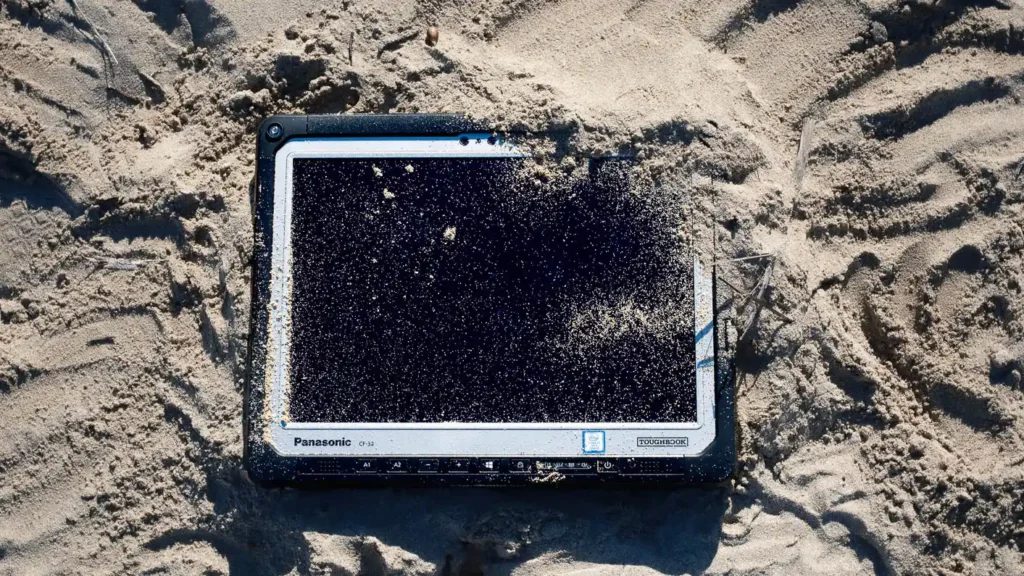
IP Ratings Explained
What those numbers actually mean and why they matter for your work environment.
When we’re helping customers choose the right rugged laptop or tablet, one of the first things we discuss is IP ratings.
It’s not just a spec to tick off; it’s one of the most important factors in matching the right machine to your work environment. Get this wrong, and you could end up with a semi-rugged laptop that fails when it gets wet. Or you might overspend on a fully-rugged IP65 machine when you don’t need that level of protection.
We’d rather spend ten minutes on the phone making sure you get the right machine than have you buy something that doesn’t suit your needs. The right IP rating for a mining site in the Pilbara is very different from what a workshop in Melbourne needs. A technician working in a covered warehouse has completely different requirements to someone doing field service in the outback or on a construction site exposed to the elements.
Over the years, we’ve seen people make the same mistakes: buying machines that are either over-specced and therefore unnecessarily expensive, or under-protected and prone to failure. This guide breaks down what IP ratings actually mean, which ratings apply to different work environments, and how to avoid the most common pitfalls when choosing rugged equipment.
What Does IP Rating Mean?
IP stands for Ingress Protection, a standardised international certification system that measures how well a device is sealed against dust and moisture. Unlike marketing terms like “rugged” or “durable,” IP ratings provide specific, testable criteria that manufacturers must meet through independent testing.
The rating is always expressed as two digits. The first digit indicates the level of protection against solid particles like dust and debris. The second digit indicates the level of protection against liquids and moisture. In both cases, higher numbers mean better protection, but they also typically mean a heavier, bulkier, and more expensive machine.
For example: IP65 means a dust rating of 6 (completely dust-tight) and a moisture rating of 5 (protected against water jets). IP53 means a dust rating of 5 (dust protected, but not sealed) and a moisture rating of 3 (protected against spraying water at an angle). The difference between these two ratings is massive when it comes to real-world durability in harsh environments.
One thing worth noting is that just because a machine doesn’t have an IP rating doesn’t mean it’s not durable. It simply means the manufacturer didn’t pay to have it independently tested and certified to a specific standard. Some machines are built tough without ever going through formal IP certification. However, if a machine does carry an IP rating, you can trust that it’s been tested to meet those exact specifications.
First #: Dust Protection (0–6)
The first digit tells you how well the machine is sealed against dust and solid particles.
| # | What It Means |
| 0 | No protection |
| 1 | Protected against objects larger than 50mm |
| 2 | Protected against objects larger than 12.5mm |
| 3 | Protected against objects larger than 2.5mm |
| 4 | Protected against objects larger than 1mm |
| 5 | Dust protected: Some dust may enter, but not enough to affect operation |
| 6 | Dust tight: Completely sealed, no dust ingress |
Most semi-rugged laptops: IP5X (dust protected)
Fully rugged laptops: IP6X (dust tight)
Second #: Moisture Protection (0–8)
This is where you see the biggest difference between semi-rugged and fully-rugged devices, which is why understanding them matters for your purchase decision.
| # | What It Means |
| 0 | No protection |
| 1 | Dripping water (vertical drops only) |
| 2 | Dripping water when tilted up to 15 degrees |
| 3 | Spraying water: Protected against spray up to 60 degrees from vertical |
| 4 | Splashing water from any direction |
| 5 | Water jets: Protected against low-pressure jets from any direction |
| 6 | Powerful water jets: Protected against high-pressure jets from any direction |
| 7 | Temporary immersion: Protected up to 1 metre depth for 30 minutes |
| 8 | Continuous immersion: Protected beyond 1 metre depth |
Most semi-rugged laptops: IPX2 or IPX3 (light moisture only)
Fully rugged laptops: IPX5 or IPX6 (water jets / heavy rain)
Common IP Ratings on Rugged Laptops
Here’s what you’ll typically see on rugged and semi-rugged machines, and what each rating actually means in practice.
IP52
Semi-Rugged
Dust: Protected (rating 5) – dust can enter but won’t affect operation
Moisture: Dripping water at angle (rating 2) – up to 15 degrees tilt from vertical
Provides basic protection, with only slightly better moisture handling than IP51. Suitable for indoor use with occasional light exposure. Not designed for wet environments.
IP53
Semi-Rugged
Dust: Protected (rating 5) – dust can enter but won’t affect operation
Moisture: Spraying water (rating 3) – protected up to 60 degrees tilt from vertical
The most common semi-rugged rating. It protects against keyboard spills and light rain and is suitable for workshops and covered outdoor work.
IP65
Fully Rugged
Dust: Dust tight (rating 6) – completely sealed, zero dust ingress
Moisture: Water jets (rating 5) – low-pressure jets from any direction
The standard for fully rugged machines. Protects against heavy rain, direct water spray from cleaning, and harsh field conditions. All ports are gasket-sealed.
IP66
Fully Rugged
Dust: Dust tight (rating 6) – completely sealed, zero dust ingress
Moisture: Powerful water jets (rating 6) – high-pressure jets from any direction
Provides maximum protection short of submersion. It’s built for the harshest environments, such as mining, heavy construction, and extreme weather exposure.
Not All Rugged Devices Are Created Equal
We regularly receive calls from customers whose semi-rugged laptops have failed due to water damage. The pattern is consistent: they assumed that because it’s a rugged laptop, it can handle anything.
Here’s a typical scenario. A technician working outdoors connects their IP53 laptop to diagnostic equipment. Rain starts, they run inside but forget the laptop. An hour later, they remember, but water has already entered through unsealed ports, hinges, and ventilation gaps. The device fails.
Semi-rugged devices with IP53 ratings are built for light rain during active use, not extended exposure to wet conditions. The ports aren’t fully gasket-sealed, which means water can enter when the device is left exposed.
If your work involves equipment being left outside or exposed to rain for extended periods, you need a fully rugged device with IP65 or higher protection and completely sealed ports.
Understanding Semi-Rugged Limitations
✓ What it handles
• Keyboard spills: most have drain ports that let liquid pass through without reaching internal components
• Light rain during active use
• Dusty workshop environments
• Bumps and drops from typical handling
• General rough use in covered work environments
✗ What it doesn’t handle
• Being left outside in heavy rain
• Water poured over the screen or through the hinges
• Submersion of any kind
• Prolonged exposure to wet conditions
• High-pressure washdown environments
Port covers on semi-rugged machines are often not gasket-sealed and their hinges may not be waterproofed. The keyboard drain can often handle a spill, but it won’t handle rain streaming into every gap in the machine.
Which IP Rating Do You Need?
This is one of the first questions we ask: what kind of environment will this machine actually be used in?
You Need Fully Rugged (IP65+) If:
• Your device is regularly exposed to heavy rain or dust
• Work involves washdown or water spray from cleaning equipment
• The laptop is left in vehicles or outdoors for extended periods
• You’re working in extreme temperatures or harsh weather conditions
• Your environment includes open-pit mines, construction sites, or agricultural fieldwork
• The device faces constant environmental exposure with no indoor protection
Trade-off: These machines are generally heavier, bulkier, more expensive. But if you need the protection, it’s worth it.
Semi-Rugged (IP53) Works If:
• Your device stays in workshops or covered environments most of the time
• You bring the laptop inside when not actively using it outdoors
• Work involves dust but moisture exposure is controlled
• The laptop is used in vehicles but stored indoors or protected when not in use
• You can actively manage the device’s exposure to weather conditions
• Your work doesn’t involve leaving equipment outside during rain or in wet conditions
Trade-off: These machines provide less protection, but are lighter, more portable, and more affordable.
NOT SURE WHICH RATING YOU NEED?
If you’re unsure which IP rating suits your work, contact us to discuss your environment and how you’ll be using the device. We focus on matching the machine to your conditions, not overselling protection you don’t need.
Quick Note: What About MIL-STD?
You’ll sometimes see rugged laptops listed as “MIL-STD-810G tested” or similar. This is a separate certification that covers physical durability including drop resistance, vibration, temperature extremes, and shock.
It’s useful information, but it’s not the same as IP rating. A machine can be MIL-STD certified and still have poor moisture protection. When choosing a rugged laptop, both matter, but for dust and water protection, focus on the IP rating.
READY TO FIND THE RIGHT MACHINE?
Browse our range or get in touch for tailored advice on which rugged laptop suits your work environment.